
Number 40: The Life and Legacy of Derek Dowson


August 13, 2025
Inside the Bison Football locker room at Great Falls High School, a testosterone-fueled cheer erupts: chanting, clapping and yelling. It’s not for a win, in fact, it’s mid August and school won’t start for 10 days. The cheers are for something bigger than a scoreboard.
At first the room is full of teenage chatter. But when Coach Tchida steps forward holding a gold placard, something shifts.
The room doesn't go silent, but the energy changes. Becomes reverent.
Nicole Marchion stands near the back with her sister Tori Dowson, watching a roomful of kids who weren't even born twenty years ago treat this moment like something sacred. Their own children are here too, wide-eyed and part of the experience.
Coach holds up the placard, which has been freshly engraved, and calls forward Colter DeVoss.
Colter takes it, peeling off the back and stepping forward. This small piece of brass metal will be added to a plaque that bears Derek Dowson's photo, joining the names of every player who has worn his number, No. 40, since the tradition began. Ten years of names now. Twenty years since Derek died at sixteen.
"This," Coach says, "is the official start of our 2025 season."
The energy of the room explodes. Players leap, fists pumping, voices collide into one thunderous sound. "BISON PRIDE!" they chant, counting down together: "ONE! TWO! THREE! BISON PRIDE!"
2025 recipient Colter DeVoss stands beside the No. 40 plaque in the Great Falls High Bison locker room, then adds his name to the players who have carried the Number 40 jersey. Derek's niece and nephew in the photo on the right.
Nicole and Tori are happy to be in this room. "You feel him there," Nicole will say later, searching to describe what’s difficult to put words to. "There are moments where I've never felt anything like that. It's very chilling."
These players had never met Derek.
They just know what No. 40 means now: grit, kindness, leadership, hard work, lifting others up and expecting more. To wear this number is to be honored.
From the back of a locker room, the Dowson family witnesses their brother’s legacy live on through young men in their community. Not just exceptional athletes, but exceptional humans. It’s a silver lining born from absolute tragedy.
August 3, 2005
It’s Aug, 3, 2005 and Coach Gregg Dart walks into the weight room at Great Falls High School, ready for his morning lift. His lifting partner isn't there.
Derek Dowson is never late. Not for lifting, not for practice, not for anything. The kid is usually first to arrive, last to leave.
But this morning, something was out of character. It strikes Coach Dart as odd but not alarming. He works out alone.
Coach Dart had been using those summer sessions deliberately, teaching Derek leadership skills. "What I'm trying to do for you, I'd like you to do for younger players," he'd tell Derek. "Would you be able to accept that role?"
Derek was all about it.
Later that day Coach Dart will get the devastating news.
“Sergeant Friday”
The Derek Dowson that Coach Dart expected to show up was guided by a moral code that didn’t leave any area for interpretation. You say you are going to show up, you show up. Simple as that. Black and white.
His unwavering sense of self was remarkable, so much so that even as a young child people took notice.
His family nicknamed him "Sergeant Friday" after the famous character in the long-running show Dragnet. Much like Joe Friday in the show, he was a strident rule-follower. Hardworking, but also no nonsense. Meeting Derek at sixteen was meeting him at five. He was firmly grounded in who he was, and he never veered from it. His conviction was so strong that it left an impression on you.
Jake Tucker, a longtime friend and teammate, remembers back to seventh grade when the two of them were planning to go to a girl's house for a party.
"When Derek found out her parents weren't gonna be there," Jake recalls, "He made my dad bring him home. He wouldn't go."
While other kids might have bent the rules or found loopholes, Derek saw the situation clearly: No parents, no party.
"He was, to a T, just a good person," Jake says, still marveling at his friend's unwavering moral code twenty years later.
"Just the kind of kid that you would want your son to grow up to be," says Eric Chaon, a dear friend of Derek’s. The two of them grew up playing basketball together.
Aug. 2, 2005 - The Night Before
The night before he died, Derek was headed out. He, along with his friends, had tickets to the Craig Morgan concert at the Montana State Fair. Tori remembers how much time and effort he put into getting ready for that night out.
Red Budweiser shirt, carefully chosen. A nice hat positioned just right. Hair styled to perfection.
"He came home so excited," Tori remembers. "He got down in the crowd, made it close to the stage, had the best time."
He was just a sixteen-year-old kid, buzzing about a concert.
Aug. 3, 2005 - Helping at the Farm
The next morning, Derek was up early. He was needed out on the family farm to lend an extra set of hands. He, and his cousin Levi, had been helping out Levi’s dad, Greg, all summer. Levi and Derek were best friends, so close in age their relationship felt like brothers.
That morning, their grandfather Al called. He needed help moving an auger. The three of them went to help, no questions asked. They'd moved the old, rickety auger many times before, always first lowering the shank — the tall corkscrew arm that moved wheat into the silo.
"We usually lower the auger down," Greg remembers, "but that day we didn’t.”
The auger had already been running that morning, moving wheat, and generating static energy within the shank.
The Ultimate Teammate
To help out others, to do good deeds were lessons that Derek and Levi heard as young kids and throughout their lives.
“I see a lot of similarities between my grandpa Al and Derek,” Levi reflects. “My grandpa Al was an incredible athlete, but he never talked about that. He never told us stories about how great he was. You had to hear from other people, from his friends. What my grandpa cared about was whether or not we were kind and whether or not we did our good deeds. Sometimes he would pick us up from school and that's what he would ask us. ‘Did you do your good deed today?’”

Those leadership qualities that he learned young, were further developed through sport.
Derek led without saying much, which made the moments he did speak carry weight. He and his sisters grew up watching their mother coach high school basketball in Glasgow, absorbing how she demanded excellence, held players to high standards and expected her players to give 110%.
“Good leaders lead by example,” Levi says. “They don’t tell you what to do, they show you how to do it and then they expect you to bring that same level.”
"He didn't say much, but when he spoke, everyone listened," teammate Bobby Howard remembers. Derek's leadership was quieter, more demanding. "You didn't want to let him down."
"He was fierce," Eric Chaon recalls of playing basketball and baseball with Derek through middle school and high school. "He was tenacious. He was the ultimate teammate. He would do anything for anybody else. He never needed the spotlight. He wanted to win more than receive any glory for himself."
Coach Mark Fought saw it most clearly in the huddle during critical moments, when Derek's focus became so intense it was "almost intimidating." His expectation of himself and his teammates pulled everyone else up to his level.
"You just knew that you had to be on your best," Bobby explains. "Whether that was screwing around on the bus or dogging it in practice — you knew what he was gonna be, and you felt his expectation of you."
Eric describes Derek as "a racehorse being held back a little bit, just always wanted to go and get after it."

Aug. 3, 2005 - The Accident
With the shank still upright, Greg and Al positioned themselves at the upper part of the auger near the wheels. Derek and Levi were at the bottom, each holding a bar that slides through a handle to lift and move the equipment.
The power line nearby carried 68,000 volts.
Earlier that morning, the auger had been running, as the wheat shank, static electricity had stored up inside. As they moved the auger, the shank got too close to the powerline. In a split second, and without coming into contact with the line, electricity arced across to the auger, channeling through the metal into their bodies.
All four hit the ground.
"Getting hit with electricity is — I can't explain it," Greg says. "It's almost like your body explodes."
When Greg comes to, he can't move. "I started screaming for Derek and Levi and finally Levi answered me, said he was alive. And I never got a response from Derek."
"I just remember, I was looking at him, trying to get to him," Greg says. "I could only see that the side of his head was purple. He had no marks on him. I didn't see any blood but he wasn't moving. So I knew something really bad had happened."
The electricity traveled different paths through each of them. "I believe that when the accident happened, the bar hit Levi's legs, shooting out through the bottom of his feet,” Greg explains. “Derek's arms were stretched out, holding onto the bar, so I believe he got the electricity right into his heart.”
Derek died instantly.
Once they were able to move their own bodies, Grandpa Al was able to call 9-1-1. Greg and Levi managed to get to Derek's body to start CPR. "We just kept doing CPR and that's when people started showing up."
The 100% Mentality
Derek didn’t shy away from hard work.
"He was gifted," Bobby recalls. "It seemed like things came so naturally and easy to him, but he was the hardest worker. You don't usually see that: people who are talented, also working the hardest out there."
That intensity showed up in basketball, where Derek wore number 33. He left it all out on the court, something he learned from his mom at a young age, watching her coach. Living her mantra: Practice the way you play.
"First guy to dive on the floor, to sprint back on defense, to blast through a screen, to fight through an elbow and not care and be bleeding and still get the rebound," Eric remembers of Derek.
In the summer, Derek and his friends would head to Holter Lake where tubing wars would break out. One boat, two tubes and a test of who could hold on to the tube and not fall off.
"Everyone else would quit and he would just win because he just had the sheer determination that he wasn't gonna lose," Jake says. "Everyone else just gave up, and that's just how he was in everything."
Derek's coaches told him to run track to get faster for football, so Derek ran the 400 meters even though he hated it. He'd come home and study the fastest times in the state, figuring out what he needed to beat. He became a state track athlete in a sport he couldn't stand, all because it served the bigger goal.
Aug. 3, 2005 - The Scene of the Accident
The power company's monitoring system detected something unusual. Al called 911. Michelle, Derek's aunt, was walking the River's Edge Trail when she got an overwhelming feeling and turned back. She saw ambulances racing up the hill. By the time she reached the farm, cars lined the highway.
EMTs moved Derek away from the others. They used a defibrillator, trying to restart his heart. They kept trying.
John Dowson, Derek's father, got the call and ran up the hill. When he saw his son's body, Greg remembers John being in shock.
The weight of it — that Derek died helping family, on family land, doing what his family always did: show up when someone needed help. Derek was doing his good deed of the day, the way his grandfather taught him.
Aug. 3, 2005 - Five Hours Away
While Derek lay lifeless on his grandfather's farm, in Glasgow, Nicole was sleeping in a hotel room. Her mom Angie was at their business, a casino, where she was cleaning machines. It was strange they were even there — the day before, John had insisted Nicole skip work and make the five-hour drive with her mom. Unusual, all around.
The phone rings. It wakes Nicole up. It's her aunt Lisa, crying, “Derek's been in an accident.”
Nicole doesn't really understand. She calls her mom, still confused, trying to explain. They need to go. Now.
Angie comes back to the hotel. They are frantic, moving about the hotel room throwing things into bags. They get in the car, peel out of the parking lot and start speeding down the highway. Five hours back to Great Falls.
They're about ten miles outside Glasgow when John calls.
"He's gone," he tells Angie. "Stop driving, and get back to Glasgow."
They pull over on the side of the road. The shock hits.
“I just remember just being hysterical on the side of the road. In a field. In Glasgow,” Nicole recalls, the memory opaque because her survival skills had kicked in.
Devastation. Disbelief. A strange focus: Get home. Mother and daughter in a dream state, where your body and brain are catching up to each other. Not knowing what they will be returning home to, but knowing they must go.
Nicole is still in her pajamas.
The Multi-Sport Athlete
The body that now lay still had been destined for greatness across multiple sports.
“His greatest moments in sports were still in front of him,” Levi says.
"He was the best athlete," teammate Zack Ringler remembers, "and that was in a class with a lot of good athletes. And he never showed it. Never had arrogance about him. Always just humble."
Derek loved sports — all of them. Baseball first, where he pitched, caught and played first base alongside Jake Tucker in Little League. Basketball, where he wore number 33 and embodied the kind of tenacious player coaches dream of. Then football became everything. His dad, John, who had played at Montana Western and loved the sport deeply, coached Derek from little guy football through middle school. Watching his son's natural talent unfold was a source of immense pride.
Derek approached every sport with methodical intensity, researching constantly — who was the best, what team, what you had to do to reach that level.
That drive showed on the field in ways that still amaze his coaches. Coach Dart saw the duality up close: "Such a nice young man, but on the football field, he could be so violent. He just could find a different level and be physical and be ornery."
By the summer before his junior year, University of Montana coaches were already talking recruiting at Griz camp, unusual attention for a kid who'd played just one varsity season.
"He was going to be an all-state performer," Coach Dart says. "He was going to be a critical fixture on our team for the next two years. No doubt."
But Derek's athletic gifts never overshadowed his character.
One of Zack's first interactions with Derek was when he was a freshman, roasting in the midday sun after two-a-days, waiting for his late ride. Derek, who'd met him maybe a week before, simply pulled up: "Do you need a ride?"
"That to me kind of encapsulates Derek as a person," Zack says.
Aug. 3, 2005 - The News Breaks
Eric was getting ready to head to the gym for some pickup basketball when his phone rang. A friend who was off on a baseball trip delivered the news.
"Hey, dude, what's going on? I heard that Levi and Derek were in an accident, that they got electrocuted or something."
Eric's first thought was minor electrocution. What were they goofing around with? He was sure they'd be fine.
Then Eric called another friend to find out more. "Dude, Derek died, man. He's dead," the friend reported.
Eric was in his vehicle when he got the chilling news. He stopped driving, called his mom, and turned around to go home.
Aug. 3, 2005 - At the Hospital
Tori Dowson was home asleep when her cousin woke her and rushed her to the hospital. When she arrived she saw her dad's friends in the parking lot holding each other and crying. What’s happening, she wondered?
She made her way into the hospital and that's when her uncle Mike got down on his hands and knees in the hallway, wrapped his arms around her, sobbing. "We lost him. We lost him."
Inside the room, her dad sat over Derek's body, hysterical.
The hospital allowed people to file through the emergency room to see Derek – a departure from hospital policy that still today is not fully understood. One by one, hundreds of people walked past his body to say goodbye. They lined up through the hospital and out into the parking lot.
Tori climbed onto her dad's lap. For hours they stayed that way, both sobbing, Derek's body right there, while hundreds kept coming — filing past, looking, crying, touching John's shoulder, not knowing what to say.
Nicole and Angie weren't even there yet.
"It was the weirdest, most surreal — I don't even know," Tori says now, trying to make sense of that day and the community's response.
Levi, Greg and Al were also at the hospital being treated for his own burns. Levi would be there for three weeks.
The Student
Derek would come home from practice and throw his backpack on the counter with one thing on his mind: homework first.
"One of the only kids I've ever honestly seen come home from school and do their homework right when they get home before doing anything else,” Levi says. “I was probably the opposite of that,” he admits.
When Tori, his younger sister, would get home ready to go relax or play, Derek would stop her: "No, you're going to sit down and do your homework first,” he’d say.
It wasn't that their parents were breathing down his neck. This was Derek holding himself, and his sisters, to a standard he'd set for himself. The expectation was clear in the Dowson household: work hard, do your best, finish what you start. But Derek took it further than anyone asked.

He never got a B. Not once. A perfect 4.0 student. "He was smart, but he put in the work," Angie says. "I think that's a really important part of the story — he just wasn't afraid to put in the work."
Aug. 3, 2005 - A Mother's Flight
While hundreds gathered around her son's body, Angie and Nicole spun the car around and headed back to Glasgow. A friend of the family arranged for a plane to fly the two of them back to Great Falls.
When they finally arrived at the hospital, Nicole still in her pajamas, the line of mourners was still going. A news crew was outside asking questions and filming the scene.
Amid cameras and reporters, Nicole and Angie walked into a scene they could never have imagined. One day their loved one was at a concert with his friends, the next day he’s lifeless in a hospital bed.
Eventually, they said their final goodbye and left the hospital. Derek had been an organ and tissue donor. After the family departed, the organ donor team removed what could be used by people in need and sent the organs and tissues on to others.
The Human
For all of his intensity and discipline, Derek had been hilariously oblivious about the simplest things.
"Are the hot springs really hot?" he'd ask, dead serious. Or: "What comes first, thunder or lightning?"
His sisters still laugh about it. "He was really, really funny," Nicole says. "Just like the driest, weirdest sense of humor. He had fun. He was funny. He wasn't always serious."
Eric describes him as honest and kind, but also "a goof.” Someone who could have fun while always giving his best.

He was sensitive to inequality in ways most teenagers aren't. When his dad offered to give him a basically brand-new truck at sixteen, Derek refused. He was actually upset about it. "No, my '95 Silverado is just fine." He seemed aware that not everyone had what he had. He also didn’t need anything new. Plain and simple.
He was stubborn about things like that. What Levi called his "internal compass." Once Derek settled on something, that's how it went.
He'd also stand up fiercely when he saw something wrong. When a girl in his class had low blood sugar and the teacher wouldn't let her get a snack, Derek didn't ask permission. He stood up and said, "She is going to get a snack."
No debate. Just clarity about what was right.
Even though the kid was talented and a hard worker, he still had his own moments of doubt. Sophomore year, he came home and told his mom he didn't think he wanted to play basketball anymore. Angie, who knew her way around a basketball court, spotted the team’s potential.
"Derek, you guys are gonna make it to state this year."
He paused. "Really? You think so?"
"Yeah, I think so."
"Oh, okay. I'll play."
Win state? No question he was in for that. He may have had doubts, but he also liked to win.
Derek wasn't perfect, and the people closest to him knew it. He was stubborn, strong-willed, and strong-headed. Levi remembers that he had an incredible temper and could hold a grudge, but somehow he was also friendly, kind and patient.
“A man of contradictions,” Levi says. The same kid who came home from school and did his homework immediately, before doing anything else, was also the one who'd watch scary movies alone in his room with the lights off just to scare himself. He could be the most literal, serious person you'd ever met, and then turn around and be a complete goofball."
"He wasn't a perfectionist," Levi says. "He was never like, 'Look at me, how perfect I am.' Derek just had values that ran deeper than most teenagers. And when something is an intrinsic value, you don't think about doing it — you just do it."
His mom says it more simply, looking back: "He was pretty smart for his age. I didn't realize it at the time."
Somehow at sixteen, Derek Dowson had figured out what many people spend a lifetime learning: if you're going to do something, really do it. Don't quit. Give your best. Treat people right.
The Quiet After
Fifteen hundred people fill the gym at Great Falls High School for Derek's funeral. So many come to honor his life, they have to set up an overflow room.
The Dowson family is escorted to the front while everyone stands. A newspaper photographer captures them, an image that will be published on the front page the next day. The community is hungry to understand this tragedy.
Tori remembers there were never that many people in the gym even for games. Standing room only. Walking in front of all of them felt surreal, uncomfortable. None of them liked the attention.
Derek wouldn't have understood what all the fuss was about.
"Biggest funeral I've ever been to," Levi would say later.
Thousands of cards arrive in the weeks that follow. People tell stories about Derek that the family never knew. Hundreds of small moments of kindness that added up to something much larger than any of them had realized. He was doing his good deeds, quietly, without needing recognition.
"You don't realize it at the time," Angie says, looking back. "He really did have an impact."
Eventually, the community outpouring quieted.
"As a parent, you never think you're gonna lose a child," Angie says. "You don't understand how you're going to react to it, how it's going to affect you, what you're going to do coming out of it. You just have to deal with it."
She had two other daughters who needed her. She had a husband grappling with his own grief. She took it day by day.
"You can't stop living," she says. "You just keep living, doing the best that you can."
But how do you honor someone who lived so fully in just sixteen years? The answer would eventually come from football.
Number 40
In the days and weeks after Derek died, the coaching staff at Great Falls High didn't know what to do. There were meetings, discussions and tears. Coaches struggling with their own grief, trying to help young players manage the loss of their teammate and friend.
One thing they knew immediately: Nobody else would wear number 40.
"You knew that you didn't want anyone else wearing number 40," Mark Fought, the linebacker coach, remembers. "So at that time, we thought the smart thing to do was just, okay, let's retire 40. Nobody else gets to wear it."
They put a write-up in the program explaining why the number was retired. It stayed that way for about ten years.
Then Mark Samson became head coach and started asking questions about the retired number. Mark Schulte was the first to suggest a different approach: "Why don't we do something similar to what the Grizzlies do, and make it a yearly thing?"
The Grizzlies. The University of Montana. Derek's team.
Coach Schulte’s son had played football with Derek and he knew that Derek loved the Grizzly No. 37 tradition.
Derek had grown up following the tradition of the No. 37 jersey being passed from one Montana-born player to the next who demonstrates hard work, dedication and tough play.
"Once Mark had said that, a light bulb went off for everyone else," Coach Fought says. "It was like, absolutely, that's what we should do."
When Coach Fought called Angie to ask about the idea, she thought it was perfect. Of course. It felt like a great fit.
The Tradition Begins
The first player to receive No. 40 was Bryce Brinkman. It was extra special, Bryce's mom worked with Mike, Derek's uncle. There was a familial connection.

But the criteria was clear from the start: the person who would wear number 40 needed to be someone who embodied Derek’s legacy: A natural leader who worked hard, but had humility and hunger for the game.
"Every year the No. 40 gets passed on to a kid who absolutely epitomizes those types of things," Coach Fought says. "We really have never had a questionable No. 40."
The tradition has taken on a life of its own. Just like the Grizzlies, the person who wears number 40 selects the next person to wear it. It bookends the season. The player to wear it next is unveiled at the end-of-season banquet, then the new season officially kicks off when that player adds their name to the locker room plaque.
"It galvanizes a program," Fought says. "This sort of transcends wins or losses, regardless of how well we're doing in the conference or in state. This is more important than all of that."
Kids who never met Derek now wear his number. They know what No. 40 means: work ethic, leadership, doing the right thing, being someone your teammates can trust.
"I get to tell a whole new group of kids," Fought says. "I got to coach this kid. This was my privilege. And here's who he was."
He pauses, his voice catching.
"If I had a son, I would want him to be best friends with Derek Dowson. If I have a daughter, I want her to date Derek Dowson. He was that great of a kid. Because if I'm that dad, knowing my son or my daughter is going out with him, I know Derek's gonna take care of whatever situation arises. That's who Derek was."
The Athletes
When you wear the No. 40 you carry Derek’s legacy with you onto the football field and into life.
"Right away I knew that I was representing something way bigger than myself," Jordan Komac who wore the jersey for the 2017 and 2018 seasons. "Obviously representing Mr. Derek Dowson, the legacy that he left, the character he was on and off the field, being an amazing student athlete, representing leadership, toughness, grit, integrity."
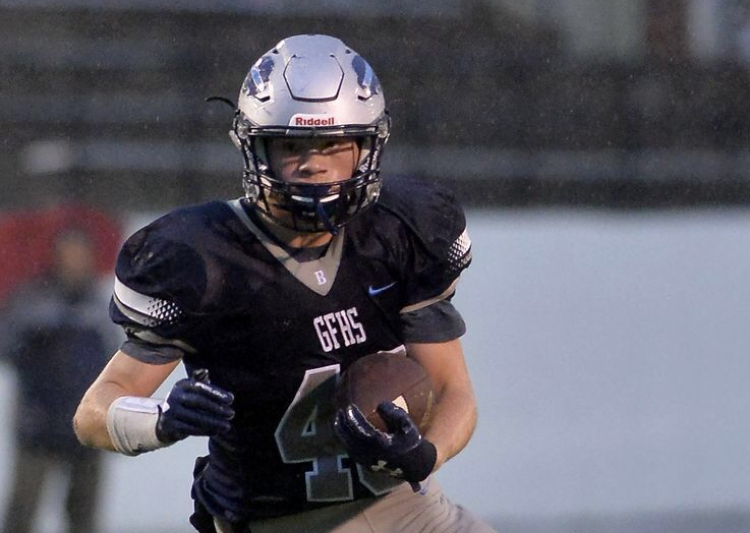
He first heard about Derek as a kid from his dad, who taught at Great Falls High. When the jersey tradition started his junior year, the team learned about who Derek was and the impact he had.
"I thought it was amazing," Jordan says. "And then Bryce Brinkman was the first to wear the jersey, and I was like, that kid fits it so well."
The honor came with weight. "I knew that I had to represent something that was a lot bigger than myself,” Jordan recalls. “So I was really excited for it, nervous for it at first, but I just knew that if I just kept being who I was, that I'd be just alright."
When it came time to choose the next No. 40, Jordan picked Kyle Torgerson. "He had all those qualities. He was a really good role model. He was a great leader for the team. He was very outspoken. He was always staying late after practice, getting extra reps in, and always there super early to practice every day."
Kyle, a wide receiver and corner, was one of the first non-linebackers to receive the jersey. "You usually look at number 40 going to a defensive guy or linebacker," he says. "So when I was selected, I kind of had two feelings. The first feeling, obviously, was such an honor. But then the second feeling was, how is a wide receiver going to wear this?"

"You feel like you represent the whole team,” Kyle reflects. “You were wearing something more than just yourself as a player. You honestly felt like you were representing two guys out there."
Kyle learned the lessons early: work hard when nobody's looking. Let down your ego. Put the team first.
"I think it transitions to life in everything you do," he says now. "Into the work world, into sports later on in college. It's a legacy that you carry into life because of the values that you live by."
Nathan Kornick received No. 40 in 2020 from Ben Held. As an offensive lineman, he couldn't actually wear the number on the field so they made him a special patch.

"I never was striving for it," Nathan says. "I felt like if I was ever striving for it, then I probably didn't deserve it. It's a thing that just happens because you are who you are, and you are a hard worker and you are committed and you care."
When Ben called his name at the banquet, Nathan had no idea it was coming. "My heart was beating so fast because I was so nervous and just sort of taken aback by all of it."
Once it soaked in, he took the responsibility to heart. "I felt like it gave me a lot of purpose in what I was doing and the role that I was playing."
To wear the jersey, Nathan says, "You need to be committed. You need to be committed to what you're doing, to the team, to the people around you, to your teammates, to your coaches. And you need to care, and the care needs to come from a genuine place."
Wyatt DeVoss wore No.40 in 2022. Zach Newton awarded it to him.

"To me, it meant everything," Wyatt reflects. "It was an award for all the hard work that you put in throughout your career. You wanted to push yourself to be the best you can be."
He first heard about the jersey his freshman year. "It was a highly talked about deal at Great Falls High. Everybody was always looking up to that person who wore that jersey."
Wyatt chose Cooper Collins to follow him. Then his younger brother Colter received it in 2025.

"It means everything to my family," Wyatt says. "We are just honored that we can have this award in our family and keep it going."
Mason Kralj, who wore the number for the 2024 season, awarded it to Colter.
Mason had been thinking about the jersey since eighth grade. "I cut out that thing in the program and hung it up on my wall, wanting to wear 40, making it a goal."
He'd grown up watching Kyle Torgerson wear it, making touchdowns. "Those were the people I looked up to immensely," Mason says of the players before him.
When Cooper chose him, "it was surreal, to be honest with you, because the people that have worn it, it's kind of “who's who” in Great Falls High football. To be recognized among those people is a huge honor."
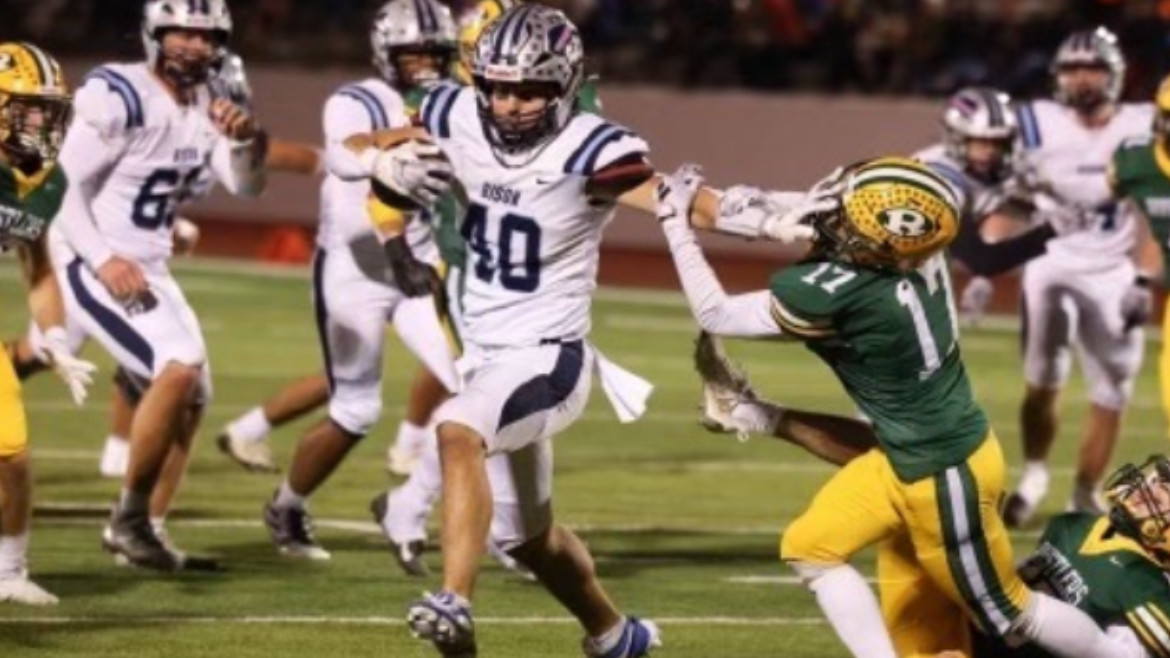
Now, heading to University of Montana Western to study physical education and play football, Mason carries the lessons with him. "It motivated the crap out of me. And yeah, it still does motivate me to see where my legacy goes now and hopefully still carry that 40 legacy."
What It Means
Ask any of them what No.40 means, and the answers echo across the years.
Jordan: "Someone who is going to be an amazing role model and have an impact on others. Someone who is a great character both on and off the field. Someone who is going to show up every day and work hard. First person in, last person out the door."
Kyle: "Something bigger than yourself. It means letting down your ego. It means putting the team first. It means representing a person in Derek Dowson that is tough to compare to."
Nathan: "Being the best version of yourself for the people that matter most to you."
Wyatt: "Honor. And just a huge responsibility that was given to you."
Mason: "Everything that Great Falls High football stands for. I think what Derek did, every Great Falls High football player should strive to be like."
Being humble. Working hard when nobody's watching. Treating everyone with respect. Putting the team first.
These aren't just football lessons. They're life lessons.
The Scholarship
"Nobody really talks about why he was so special,” says Mark Fought, the linebacker coach who knew Derek so well. “He's special because of that lady right over there." He gestures to Angie. "His mom. She's a steel magnolia. She is all beauty on the outside, but inside, that lady is an absolutely strong woman. Independent, fierce. That is where Derek got it from."
Nothing demonstrates that more than Angie’s decision to start a scholarship fund in Derek’s honor just after he passed. Derek would have been a junior.
With the help of her sister Stacy, she wrote all the rules: 3.2 GPA or higher. Two-sport athlete, minimum. Essays explaining your goals, your challenges, what drives you.
The scholarship criteria reflect exactly who he was: student first, athlete second, character above all. Every year, the essays arrive in the mail. Angie reads through every single one, considering carefully who should be its recipient.
"It's very humbling," she says. "Reading about all these kids and what adversities they've come through and why they strive to be what they want to be. They put time and effort into answering these questions."
For years, the family went together to present the scholarship. Then John died. Nicole and Tori had moved away from Great Falls. Angie became the constant, showing up every year, meeting each recipient and their family.
"She has said, more often lately, that this is all she has left of him besides his things," Nicole says. "So, it’s extremely important to her."
The scholarship continues. Twenty years of students who earned it not just through grades or athletic ability, but through embodying Derek’s character.
"It's not just the dedication to sports," Levi says. "It's dedication to your community, to caring about people other than yourself. You don't step on people to get to the top. You make room for more people at the top when you get there."
"It's another way that we can have him live on through all this," Angie says.
The Foundation
The scholarship and the jersey are part of his lasting legacy, but now, Nicole and Tori are envisioning a third component: The Derek Dowson Foundation to create something that will last beyond all of them.
The goal is to help families pay for their kids' activities — $100 at a time, $5,000 a year.
"I was talking to the program director at the Salvation Army when signing our son up for flag football," Nicole says. "Do people have trouble paying for this?” She asked. “You have no idea’, he said 'We can only cover half.'"
If they can help even a handful of kids play football, join a team, participate in something that builds character — their aim is to help families give their kids opportunities to access the activities that shaped their own childhoods.
"There's a way it can have a big impact," Nicole says. "We want to do the work Derek would have done himself if he was still here."
The foundation won't stop with them. The goal is to build something that continues long after they're gone, ensuring Derek's legacy keeps growing.

2025: Back in the Locker Room
"This," Coach says, "is the official start of our 2025 season."
The energy explodes."BISON PRIDE!" they chant, counting down together: "ONE! TWO! THREE! BISON PRIDE!"
From the back of the locker room, Nicole and Tori watch teenagers who never met their brother treat this moment like something sacred. Their own children are here too, witnessing how Derek's story has become woven into the fabric of this community.
"You feel him there," Nicole says.
Twenty-one years ago, on a Montana summer morning, Derek Dowson died instantly on a farm outside Great Falls, helping his grandfather, the man who instilled in him the importance of doing good deeds for others. The randomness of it, the unfairness, the waste of potential — it could have broken his family.
Instead, they made a choice.
Not immediately. Not without tears, grief and days when getting out of bed felt impossible.
But eventually, deliberately, they chose to honor Derek by living the way he lived: showing up, giving their best, expecting more from themselves and others.
Angie has endured what no parent should — losing her son at sixteen, her husband five years later, her mother, brother and father. More grief than most people face in a lifetime. Yet she keeps reading scholarship essays, meeting No. 40 players, supporting young athletes with the same steady strength her son had.

"You can't stop living," she says. "You just keep living, doing the best that you can."
The Dowsons stopped asking "why" a long time ago. Now they ask: "What now?"
The answer thunders from this locker room.
It lives in scholarship recipients pushing through adversity.
It sparks belonging in children who have been given the chance to play.
It multiplies in young men learning to be first in, last out — to work hard when nobody's watching, lift others up, tap into their inner moral compass.
Derek’s friends and coaches think he probably wouldn't want all this attention. He'd be uncomfortable with the spotlight he never sought. But Derek may also recognize that his family turned their deepest pain into something that lifts others up.
One moment you're at a concert. The next moment you're gone.
But if you lived like Derek lived: with integrity, kindness, competitiveness, humility and an unwavering commitment to doing things right — your impact doesn't end.
It multiplies.
To support the work Derek's family is carrying on in his name, including Opportunity Grants that will help Great Falls kids cover registration fees and equipment and the scholarships awarded each year in Derek's name, visit the Derek Dowson Foundation at derekdowsonfoundation.org or mail a check payable to the Derek Dowson Foundation to 2 5th St N, Suite 101, Great Falls, MT 59401.


